
For those who love cats and dogs, pet ownership is a mix of joy and frustration—especially for working professionals who live alone. While pets bring happiness and companionship, they also leave fur and dander scattered throughout the home. Returning home after a long day at work only to find pet hair and dander everywhere can be quite disheartening.
This is where a dedicated pet vacuum cleaner becomes essential, helping you keep your home clean and tidy.
Unlike ordinary household dust, pet hair tends to cling to surfaces, tangle easily, and spread rapidly—meaning you have to be ready to clean at a moment’s notice. A pet vacuum cleaner is the perfect solution. Equipped with powerful suction (often 120AW or higher) and specialized anti-tangle brush heads—such as V-shaped spiral designs or active hair-cutting mechanisms—these vacuums can effortlessly extract hair embedded deep within carpets or tucked into the crevices of your sofa.
Compared to manual cleaning, a pet vacuum cleaner not only ensures a thorough clean but also saves you a significant amount of time. Most models feature a multi-stage filtration system with an H13-grade HEPA filter, which traps 99.99% of fine dust and pet dander. This prevents pollutants from being released back into the air, making these vacuums an excellent choice for those prone to allergies. Furthermore, many models come with specialized attachments—such as pet grooming brushes or crevice tools—that allow you to clean loose fur from floors, cat trees, curtains, and hard-to-reach corners, greatly easing the daily cleaning burden for pet-owning households.
Some might ask: “I already own a vacuum cleaner—do I really need one specifically designed for pets?”
At first glance, there may not seem to be much difference. However, after using them for a while, the distinctions quickly become clear. The fundamental difference between a vacuum cleaner designed for pet hair and a standard vacuum lies in the structure of the brush head and the cleaning mechanism. While standard vacuums rely on negative pressure to pick up loose dust, pet-specific models use a combination of “physical detachment” and “targeted suction” to extract hair embedded in fabrics, all while preventing the hair from tangling around the brush.
The design of the brush head is crucial. Standard vacuums typically feature soft rollers or smooth suction nozzles, whereas pet-specific models are equipped with rubber blades, V-shaped comb teeth, or anti-tangle rollers. These components effectively remove hair while ensuring it doesn’t get wrapped around the brush.
Pet-specific vacuums also feature more powerful motors and optimized airflow systems, allowing them to extract hair deeply embedded in carpet fibers or woven into furniture upholstery. In standard vacuums, suction power often drops significantly if the brush head becomes clogged with hair; pet-oriented models, however, are engineered to prevent such blockages.
Another often-overlooked factor is noise. Standard vacuums can be quite loud, which may startle timid pets and cause them to hide. Pet-friendly vacuums operate more quietly, making them a much better choice for households with animals.
In short, while both types of vacuums can clean up dirt, only those designed for pet hair are specifically engineered to handle the unique challenges of pet fur, dander, and heavy shedding.
If you are considering purchasing a vacuum for pet hair, take a look at this model from Langchi:
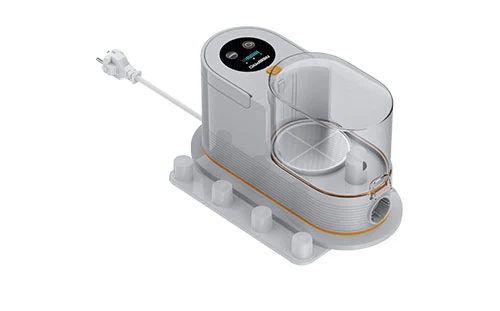
It features a portable, minimalist design. You can groom or trim your pet’s fur while simultaneously vacuuming it up, completely eliminating the problem of hair scattering everywhere. It combines grooming, trimming, loose-hair removal, and furniture cleaning into one convenient tool—no extra cleanup required.
| Size | 320x150x185mm |
| Rated Output Power | 105W |
| Maximum Product Size | 2000ml |
| Hose Length | 1.5m |
| Power Cable Length | 3m |
| Operation Radius | ≥4m |
| Main Material | ABS |
| Input voltage | AC220V, can becustomized global voltage |
| Host noise | required≤62dB 1M distance |
| Cutting noise | required ≤65dB 30CM distance |
Please feel free to contact us if you have any questions!

